nightmayer

Jottings from a pop culture junkie

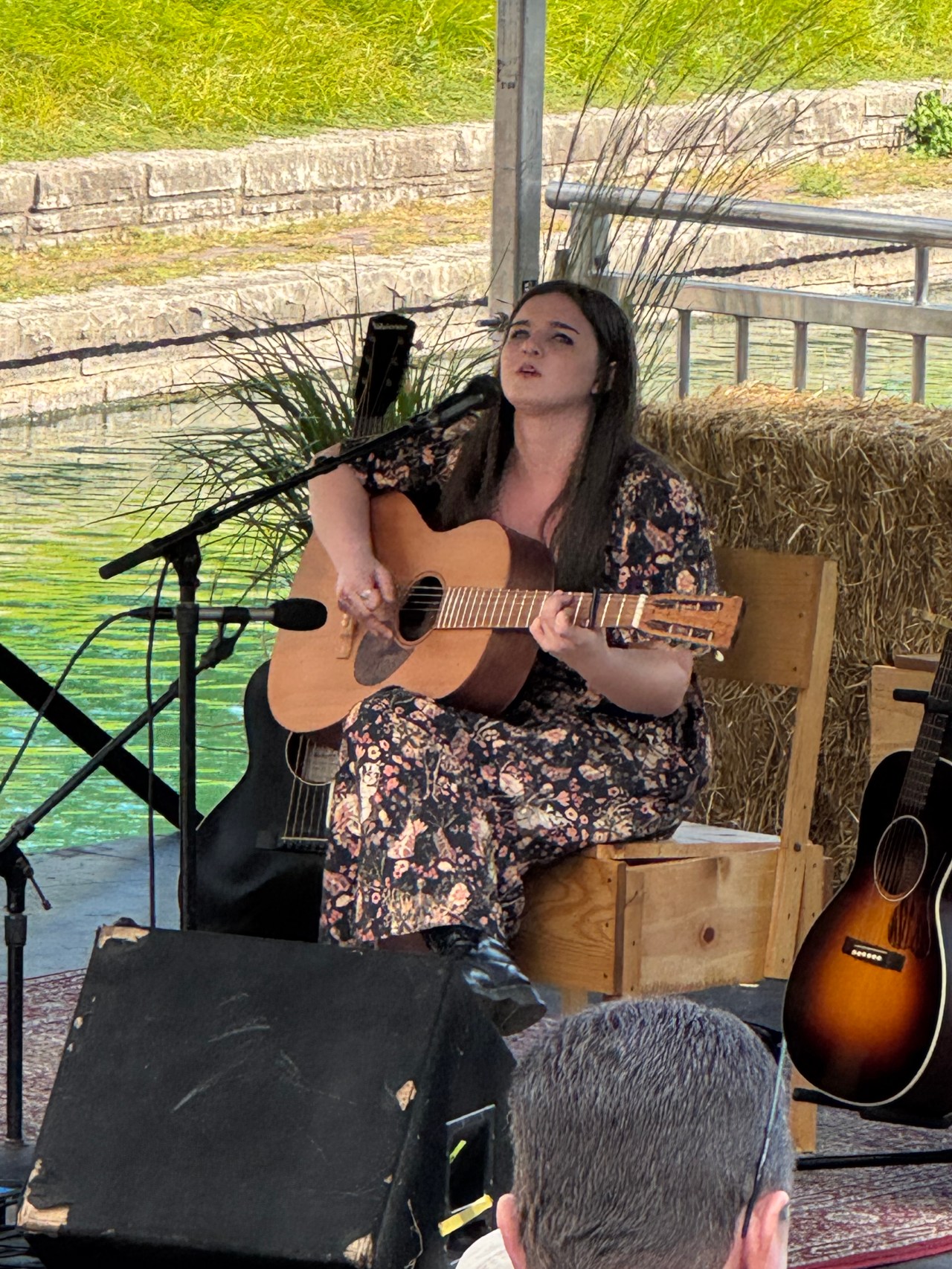
NYC friends: Muireann Bradley is playing Tuesday Sept. 16th at 8 p.m. at the First Unitarian Church, 199 Pierrepont St., Brooklyn (doors open at 7 p.m.). I’ll be there. You should be, too.

Why? And who is Muireann Bradley?

If you didn’t know Muireann Bradley was an 18 year old from County Donegal, Ireland, you would swear she studied under the late Dave Van Ronk for years. Or Erik Frandsen. Or, like David Bromberg, that she’d apprenticed herself to the late Rev. Gary Davis in the 1960s. She’s done none of those things.

Taught guitar back home by her father, and picking up repertoire from his collection of Davis, Mississippi John Hurt, Blind Blake, Elizabeth Cotten, Memphis Minnie, and Blind Lemon Jefferson records, among others, she plays by ear (“I don’t read tabs or music,” she says in an online interview). And she sings in a sweet, nasal, country-twang-ish voice that is instantly endearing for just how young and untrained it is.

The songs — “Candy Man,” “Freight Train,” “When the Levee Breaks” — are familiar to those of us who heard them during the folk revival or earlier. She’s a new generation, though, introducing them to her contemporaries. That is the folk process at work.

In addition to those country blues that are clearly a passion, at the Evanston Folk Festival this past weekend she sang Jackson Browne’s “These Days,” Dylan’s “Don’t Think Twice” and her “first original song,” which had all the sass of Bessie Smith at her lascivious best. Broad smiles raced through the crowd followed by a well-deserved ovation born as much of the delight of discovery as the superb finger-picking.

An early (which is to say recorded during lockdown, so she was mid-teens) album re-mastered and re-released by Decca UK doesn’t do her full justice (it’s streaming on Spotify/Apple/Amazon, too). She’s matured as a player and an entertainer since then and even since the six-month-old live clips on Youtube.

Come join in the delight of discovery when she plays under the auspices of the World Music Institute next week!

(More on the Evanston Folk Festival soon. What a great event!)

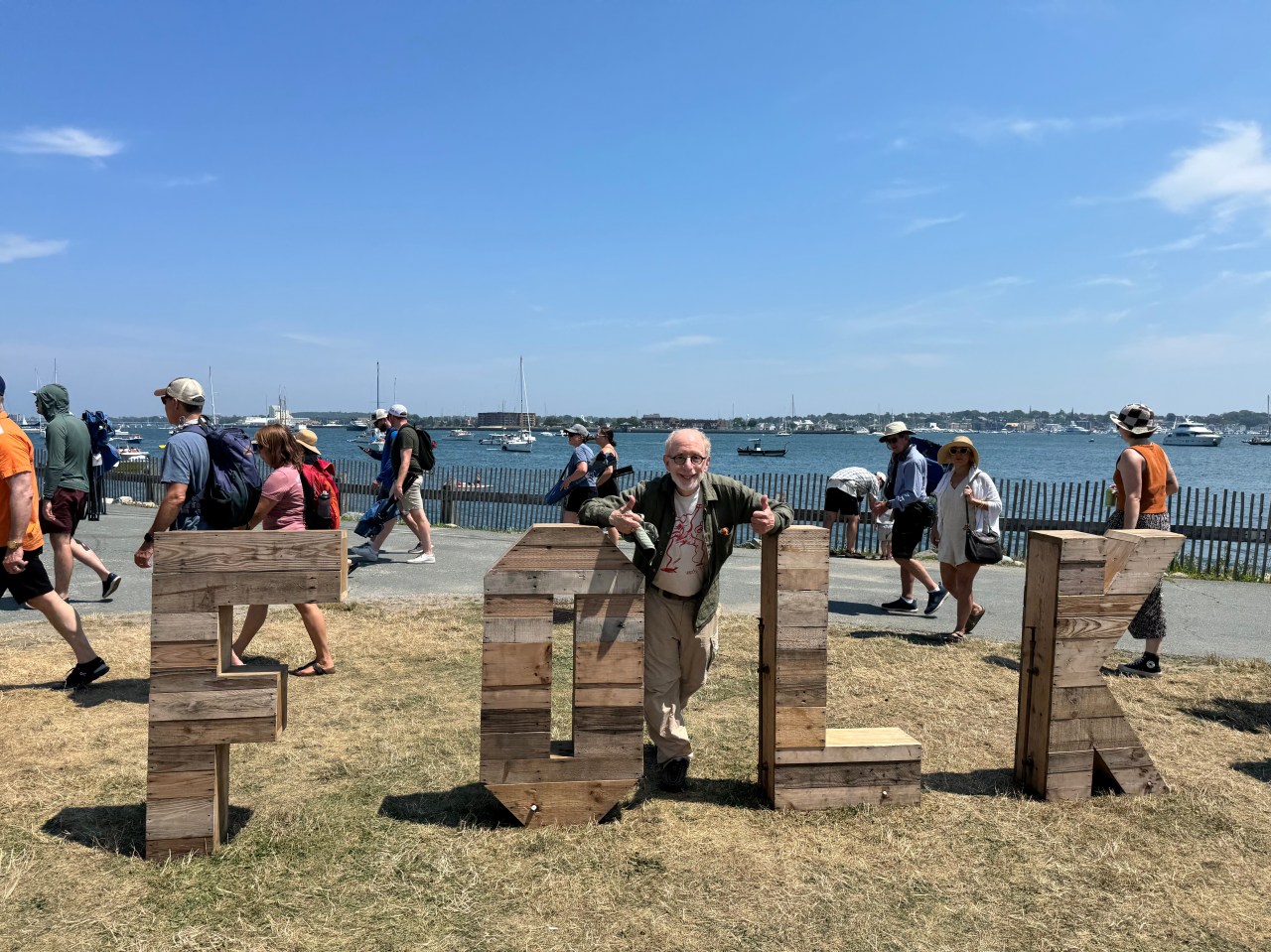
The question strangers ask between sets at the Newport Folk Festival — and yes, strangers talk to each other at Newport! — is no longer “Is this your first?” The question is “How many have you been?” Since I’m older than most but not all of the attendees, I usually “win” noting that my first was 1969 when the Sunday afternoon New Faces concert featured Joni Mitchell, Van Morrison and James Taylor (Taylor famously got rained out).

The question when I return home is, “Who’d you hear-who’d you like-who was your favorite?”

I start by explaining that Newport isn’t a folk festival anymore, and barely has been for at least a decade. It’s an Indie Rock-Americana-Inflected Country-Hip-Hop-Everything Festival. I’m not sure anyone knows what I mean, but that’s how it’s evolved. And the programming is so reliable that this festival regularly sells out months before a single artist is announced.

There are three primary stages whose schedules overlap, so you will never see everything or everyone you had hoped to see. Indeed, you will miss far more than you will see or hear in any given year.

The paths between the Fort, Harbor and Quad stages are narrow and crowded, with 10,000 attendees (not counting musicians and staff) inching along to sample as many sets as they can. There is minimal shade, though the festival organizers have been adding bigger and bigger shade tents where they can, and that is very appreciated.

Each year I dutifully listen to just about all the acts I’m not familiar with in advance so that when the schedule is released a couple of weeks before the festival I can map out my days — a map that may or may not prove useful, given the crowding, or because something else catches my ear while en route, or a severe rainstorm interrupts the proceedings, or courtesy of our 19-month old grandson wanting to hang at the family tent and bang maracas on a bongo drum.

I offer my personal highlights and observations here and urge you to read some other folks’ recountings and discover that there’s very little overlap. Also, search Newport Folk 2025 on YouTube and pick your own favorites among scores of videos fans have posted. My list:

• Jesse Welles, who writes and sings like a cross between Bob Dylan and John Prine, with much of his set given over to what might once have been termed “protest songs.” Prine’s son, Tommy, guested during Welles’s, set singing his dad’s “Angel from Montgomery” as a heartfelt duet with Welles, Welles himself sounding more John Prine-like than even Tommy. Also, check out Welles, Lukas Nelson and Nathaniel Rateliff on “That Can’t Be Right.” Rateliff, who has been featured in previous years, wasn’t on the program this year, yet performed an unannounced festival-opening set Friday morning which most people likely heard, if at all, while waiting to get through security and onto the grounds. Rateliff joined just about everyone during their own sets throughout the festival, and kicked off the traditional closing “Goodnight Irene” Sunday night.

• Speaking of fathers and sons and Lukas Nelson: the more he sounds like dad Willie, which was much of his time on stage, the better — vocally, melodically, and in structure of his set.

• Luke Combs, who performed an acoustic set with his band. “We never get to do this anymore,” he said excitedly and repeatedly, also commenting how the view from the stage (of the Newport Bridge and harbor) was the best he’d ever had. And suspecting that not everyone was familiar with his songs, he gave lovely brief, highly personal background for just about each one.

• Obongjayar, a London-based Nigerian singer whose propulsive mix of Afrobeat and soul is high energy and highly infectious. Think Jimmy Cliff meets Fela Kuti.

• Big Freedia. As my son-in-law put it, “It’s. A. Production.” Soul, hip-hop, a bunch of kids on the stage dancing with her, as was the early-afternoon audience in the dance pit down front of the stage.

• Waxahatchee, aka Katie Crutchfield. I don’t always recognize her voice on WFUV-FM, yet invariably hear songs that catch my attention and they turn out to be her. Great set and guested with many others. Here she is with MJ Lenderman, “Right Back to It.”

• I’m With Her. I’m a fan of each individual member — Sarah Jarosz, Aoife O’Donovan and Sara Watkins. Great instrumentalists, singers, and songwriters. Their voices blend beautifully. On record and live the mood and tempos can drone; Watkins even addresses it (she’s used the line often): “Okay, the folkies can relax now. Here comes the banjo!” True to her word, that was the song that elicited the loudest cheers.

• Dan Reeder, performing with his daughter Peggy Reeder was a mystery. I’d heard about him from my son and son-in-law, both of whom were eager to hear him live. The problem was both Dan and Peggy sing so softly that they were barely audible. Have to check out the recordings more closely.

Among my favorites discovered post-festival on Youtube: A rocking, intense, fun “Maggie’s Farm” featuring Margo Price, John C. Reilly, and Jesse Welles; Maren Morris with Lukas Nelson on “Me and Bobby McGee;” Mavis Staples (also not scheduled but a regular on this festival stage for more than 50 years) with Jeff Tweedy and Lucius for “You Are Not Alone.” This is a great rabbit hole.

If you haven’t gotten the idea yet, just about every set features musicians sitting in who are also appearing on their own. (And yes, Kenny Loggins’s first hit album was “Sitting In” with Jim Messina; Loggins was featured on the roster this year, though I heard only the last song and a half of his set, his voice instantly familiar even as I rounded the path to the main Fort Stage.

Like us humble ticket buyers, though, once a musician has experienced Newport the Un-folk Folk Festival, they want to be there, and often clear their weekends to hang out all three days whether they are formally on the schedule or not.

Our family calendar is marked for July 24-26, 2026, with thanks to our daughter and son-in-law for donating to the Newport Folk Foundation at the festival each year to secure our chance to buy tickets for the following year!

P.S. While my first Newport was 1969, we took our kids when in the ‘90s, ‘00s, and ‘10s when they were in middle school, high school, college, and on. This was our 3-1/2 year old granddaughter’s 4th Newport, and the 18 month old’s 2nd. As Tevye sings, “Tradition!”

For the better part of 25 years, through 2013, I published and was executive editor of The Licensing Letter, an ad-free paid subscription newsletter about licensing — applying corporate brands, entertainment franchises and other intellectual property to generate brand extensions into apparel, toys, food and additional product categories for marketing purposes and profit.

What would we have done if Alligator Alcatraz had come in over the transom as a “brand,” with its alligator and python logo that already adorns t-shirts, beer koozies, and caps, with a request for coverage that it is available for licensing? (NOTE: I don’t know if it is, don’t know if the images have been protected, etc.) I like to think we would have taken a stand and said this was a step too far. Many steps too far. I fervently hope that the current editor and publisher of The Licensing Letter don’t have to confront this issue.

I remember the angst in the office when a press release came in about the availability for licensing of the Uzi brand of submachine guns and pistols. Do we run it in our lists of available properties, as we routinely did for even the most absurd potential brand extensions?

After speculating about the types of merchandise that might be produced, and some uncomfortable jokes, I believe (if memory serves), we decided it was a legitimate, legal property and that yes, it should be listed. Ironically, the backlash to the Uzi company — and to the publication — was sufficient that Uzi pulled it back from licensing very shortly thereafter.

There is a thoughtful, rightfully angry opinion piece about the merchandising of Alligator Alcatraz in The Forward, the award-winning news organization that covers “the issues, ideas and institutions that matter to American Jews” and, I daresay, should often matter to all, as in this case.

Link in the comments; brief excerpts follow:

By Nora Berman
Deputy Opinion Editor, The Forward

“When you make merch out of suffering, it makes that suffering seem less real. Even funny. In the U.S., this wave of branding misery is making it easier for the government to get away with transparently inhumane policies. . . .

“The idea behind the tactic is simple: Making fun of something damages the integrity of the butt of the joke. Earnest pleas for civility can be met with a cool, assured, ‘I was just joking.’ . . .

“But for their intended audience, the memes — and the merch — are meant to easily deflect all those concerns. They invite their supporters to ask: Can Alligator Alcatraz really be a concentration camp if it has an official beer koozie? . . .

“Memes, silly names, jokes and cartoonish merch — all of this commodification does the same thing: It turns the Trump administration’s devastating crackdown on immigrants into a joke for his supporters to laugh at, rather than a set of real-world policies affecting very real people for whom they could conceivably have compassion. The merchandizing of the ICE detention center in Florida takes this noxious trend to the penultimate step: capitalizing off of human suffering.

“’The goal is to raise awareness to what the policy is.’ Evan Power, the chairman of the Florida Republican Party, told Fox 13 about the line of merchandise. ‘But second of all, when you sell merch, you get names, you get emails, and then you make some money off of all of it.’”

Thank you Nora Berman and The Forward.

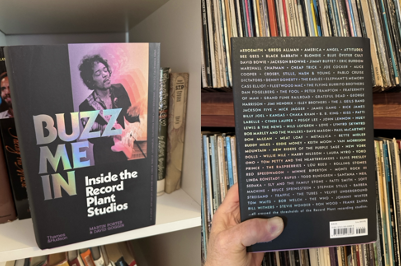
Excited to see my good friend Marty Porter’s book “Buzz Me In: Inside the Record Plant Studios” hit #1 on amazon’s Pop Artist Biographies list, #1 in Music History & Criticism, and #4 in Popular Music (behind three Taylor Swift novelty books) following a phenomenal Bob Lefsetz review two weeks prior to publication!

I can vouch for Marty and co-author David Goggin literally working on this for a decade. I’ve been fortunate to be very close to it, monitoring the progress on over 100 interviews, reading early chapters and three prior “complete” versions, and watching as Marty obtained permissions for using hundreds of photos (there are 266 illustrations in the final 352-page book). “The book”Buzz Me In” truly captures the spirit of the times, and for anyone curious whether the tales of ‘60s/’70s/’80s sex, drugs and rock and roll are true — it’s all right here. As Lefsetz (who I don’t know) wrote earlier this week:

“Just when you think every story’s been told…

“This particular book has not been written before. We’ve got books listing all the sessions, but exactly what went down inside the buildings…some of us care, and if you do…

“The book made me feel good, it made me feel like my life was worth living, that my choices were good….

“To go into the studio back in the day… There was a magic, your skin tingled…

“And that feeling is captured in this book.”

If you’re not sure your faves are included, just look at the back cover. Congrats to Marty and David, but you too can now buzz yourself in on a fun read layered with rock and roll history.

May 1, 10:40 a.m., Acquavella Gallery, 18 E. 79th St.

Riva and I meet our friend (the almost-a-relative kind) Herb, an artist still active in his 90s who lives in NJ and takes public transportation to and from Manhattan to tour galleries. We have two of his large paper cuts hanging in our home.

Herb’s been inviting us to join on his jaunts lately, and is unintentionally (we think) inspiring us to look at art differently — to examine technique much more closely, along with content and context. Here we all agree that Miquel Barceló’s sea-inspired ceramics are more interesting than his paintings.

Next stop, a Franz Kline show at Mnuchin Gallery (45 E. 78th St.), trying to guess the timeline for the different works, all of which are stark and provoke completely different interpretations from each of us.

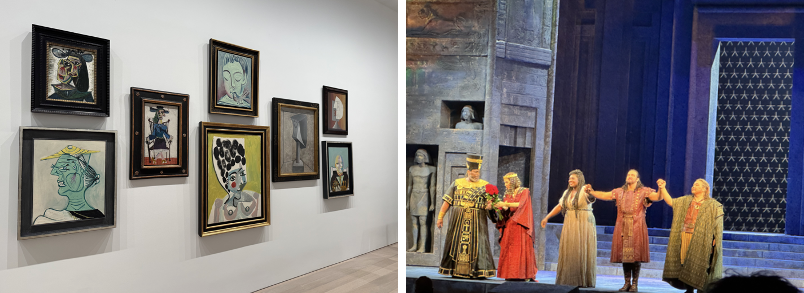
The core of this tour is the Paloma Picasso collection of her father’s works at Gagosian (980 Madison Ave.). If you can get there on a weekday morning, the gallery is very lightly trafficked and it is a chance to be intimate with these amazing career-spanning works, unlike what happens at MoMA (a museum we also love). GO!

We finish this tour with a survey of works by Alice Neel, Marcia Marcus and Sylvia Sleigh at Levy Gorvy Dayan (19 E. 64th St.). The artists and these particular works might have been better served before the Kline and Picasso, but that was a matter of mapping the most logical route.

7 p.m., Alice Tully Hall

Riva and I return to Manhattan for the Chamber Music Society of Lincoln Center’s season finale honoring the 55-year-old organization’s founding Executive Director Charles Wadsworth. A wonderful concert with a bonus of superior people-watching of those dressed for the gala dinner held in the lobby after. “The exit is this way,” announced one “host” after another, clear that we were not among the guests this night.

9 p.m., Lincoln Center Plaza

Instead of asking, as Riva suggested, if there were any no-shows whose seats we might be able to take, we walk across the street to the fountain in Lincoln Center Plaza. We seat ourselves on the perimeter and eat the sandwiches we’d brought from home. We watch a lot of people exit the Metropolitan Opera — but not everyone. Riva looks up what’s on. Aida. We look at each other. Two women are at the fountain next to us taking photos.

“Are you leaving the opera?”

“Yes, it’s too long for us.”

“Can we have your ticket stubs?”

They’re a little flustered but reach into their bags and pull out their tickets and the extra ticket you need to re-enter from outside at intermission. “You’ll need these, too.”

We thank them, finish our sandwiches and look at the tickets. Orchestra Right, Row S, not far off center. In we waltz, grinning, soon to be astounded by Elina Garanča, in particular, as Amneris. So we missed the “triumphal” scene in Act II — no live elephants anymore, anyway — and see and hear the last two acts.

10:40 p.m., exactly 12 hours after the start of our day, the cast, along with conductor Yannick Nézet-Séguin, take their bows.

We exit and walk to W. 57th Street to catch the Q train home.

And that, my friends, is a New York minute.

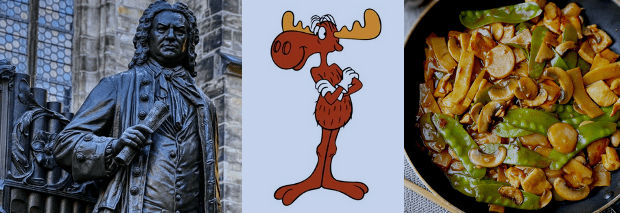
BROOKLYN, NY Jan. 29, 2025—Seeking calm as you consider the last 10 days’ news? Glenn Gould’s Bach piano concertos and Simon Preston’s Complete Bach Organ Works (latter is 19 hours; links are Spotify) are my go-to right now.

While I usually watch movies on the treadmill, the Kennedy HHS hearings this morning had me so riled up I opted for Rocky and Bullwinkle, “Moosylvania Saved.” How prescient is this episode? Bizarre. (Youtube link pulls the “Moosylvania” segments from multiple shows in season 5 into one 14-minute stream.) Aside: Yes, I still have the Bullwinkle watch my friends gave me in high school. And it still works.

The latest in comfort food: A revival of interest in 1950s/’60s Chinese-American restaurant fare is definitely in the making. Moo goo gai pan showed up in the NY Times (reprinting a 2023 recipe) and the Times crossword puzzle in the span of a few days; and egg foo young and chop suey have come up in general newspaper/magazine reading. All in this 10-day news cycle. That’s a trend, folks.

Moo goo gai pan and egg foo young, incidentally, are both Cantonese; chop suey appears to have been concocted in the U.S. All were staples of Chinese-American restaurants back in the day. Happy Lunar New Year!

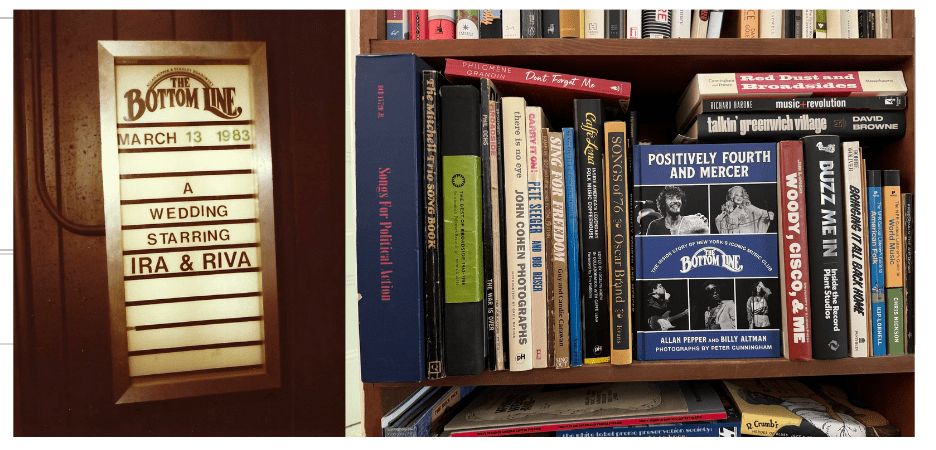
The photo above is likely a not unusual bookshelf among my contemporaries. I periodically pull a book from one of many such shelves and read a random passage. This morning it is Umberto Eco’s, “The Name of the Rose,” first published in Italian in 1980 and in the U.S. in English in 1983.

The year is 1327, the speaker a Franciscan monk, Brother William:

“Wondrous machines are now made, of which I shall speak to you one day, with which the course of nature can truly be predicted. But woe if they should fall into the hands of men who would use them to extend their earthly power and satisfy their craving for possession. I am told that in Cathay a sage has compounded a powder that, on contact with fire, can produce a great rumble and a great flame, destroying everything for many yards around. A wondrous device, it it were used to shift the beds of streams or shatter rock when ground is being broken for cultivation. But if someone were to use it to bring harm to his personal enemies?”

This is why having physical books staring at you is important.

“Family Affair” was a #1 single for Sly & The Family Stone in 1971. Yet “musical families” take different forms, as illustrated by two recent concerts.

In December, there were the Wainwright/McGarrigle family holiday concerts (one at Town Hall NYC, and one I saw at Brooklyn’s Murmrr; there had been others in Canada). A flow chart or family tree would be helpful if you don’t know the players, what with almost everyone on stage being related. When Loudon Wainwright III came out to open the shows, he swept his arm across to indicate the other performers seated on benches along the rear and sides of the stage, and said, “If it weren’t for me, none of you would be here.”

OK, Emmy Lou Harris is an honorary member of the family and she was part of the show. Yet with Wainwright siblings Rufus and Martha Wainwright leading the festivities honoring their late mother/Loudon’s first wife Kate McGarrigle, it was reminiscent of the annual holiday shows where sisters Kate and Anna brought out their kids to sing. I remember Rufus and Martha on those shows as pre-teens and teens. Now it’s their kids they bring out. Then there is Suzzy Roche, whose daughter (by Loudon), is Lucy Wainwright Roche, with both Suzzy and Lucy participating. Then there was Loudon’s sister Sloan Wainwright, and, well a host of others. The concert, as in the past, was enchantingly bedraggled and professional all at once.

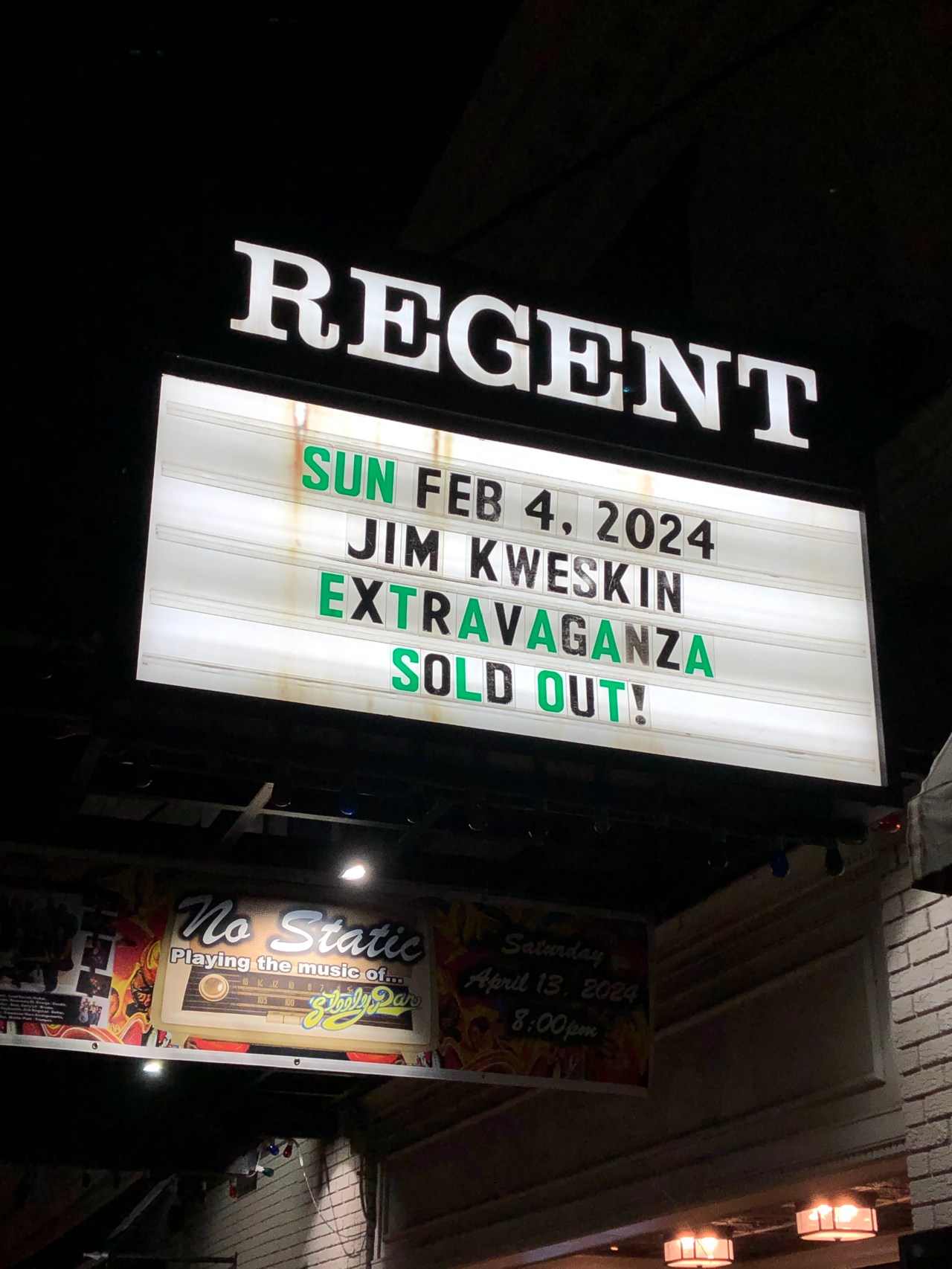
Early February’s “musical family” was of a different sort. The Jim Kweskin Extravaganza, as it was billed at the Regent Theatre in Arlington, MA, brought together an array of musicians who’ve performed with Kweskin over the years, notably Geoff Muldaur and Maria Muldaur, who were part of the original Jim Kweskin Jug Band and who participated in a jug band segment to close the show (each had also performed duets with Jim earlier in the program). Jim and Geoff started performing together in 1963, with Maria joining not too much later.

The “direct” family on stage for the Extravaganza were two of Kweskin’s three children (the third was in the audience), his granddaughter, who sang “What Does the Deep Sea Say?” which her grandmother — Jim’s first wife, also in the audience — wrote.

The “extended family” was the Fort Hill community in Roxbury, MA founded by the late Mel Lyman, who played banjo and harmonica in the original Jug Band. Kweskin was a charter member of Fort Hill, which you and I might think of as a commune (it’s MUCH more complicated than that; see below) in 1967. Kweskin still lives in one of the community’s homes there.

Kweskin projected a picture of the kids he used to teach songs to in Fort Hill in the 1960s and ‘70s — and then brought 16 of them on stage to sing a few of those numbers with him. Those “kids,” of course, are now mostly north of 50. One of the songs Kweskin taught them way back, which they sang with a wink and a nod on this afternoon: “I Am My Own Grandpa.” Some of those people also performed duets with him, as did others who may or may not have been part of Fort Hill growing up (ditto for some of the 15 band members).

If you don’t know Kweskin, he’s a polymath in his musical tastes and he offered a generous three-plus hour sampling: Irving Berlin, New Orleans jazz, classic blues, Woody Guthrie, Bing Crosby (by way of Jimmy Van Heusen and Johnny Burke), straight-ahead jazz and, of course, jug band.

Kweskin was in good voice — sounding more and more like Willie Nelson except that while Kweskin is seven years younger than Nelson, Kweskin was performing as a singer for about 10 years before Nelson (Nelson was already a well-established songwriter when he embarked on his performing career).

The Extravaganza — the term being a little tongue-in-cheek, but only a little — was live-streamed, and Kewskin said they’d “figure out how to make it available.” In the meantime, there’s a new Kweskin album, “Never Too Late: Duets With My Friends.” Bought a copy (along with Maria’s latest), so haven’t heard it yet but most of the songs were included in the concert with the same duet partners. And an updated Kweskin/Maria Muldaur “Sheik of Araby”…well, who wouldn’t want that in their collection? It’s all in the family, after all.

[If you’re not familiar with Lyman’s story it’s not as gruesome as Charles Manson’s cult of a couple of years prior, but it was strange and cult-like as well — essentially an anti-hippie commune but with very traditional male/female roles, plenty of disciplinary action, and all activity focused on providing for Lyman’s personal sexual and other needs in order to facilitate his music-making, writing, and filmmaking. Lyman’s death in 1978 is still shrouded in mystery and wasn’t revealed by the Fort Hill community for six years. To learn more, start with the Wikipedia entry; it offers links to additional resources including David Felton’s Rolling Stone Fort Hill expose from 1971 and other material from an archive devoted to Lyman.]

P.S. If you’re reading this, Mike and Catherine — sorry the others you bought tickets for couldn’t make it, but thanks for selling them to Riva and me minutes before showtime. Delighted to be your seatmates!

Belle Harbor-ites, Rockaway-ites, anyone living in a beach community, take note!

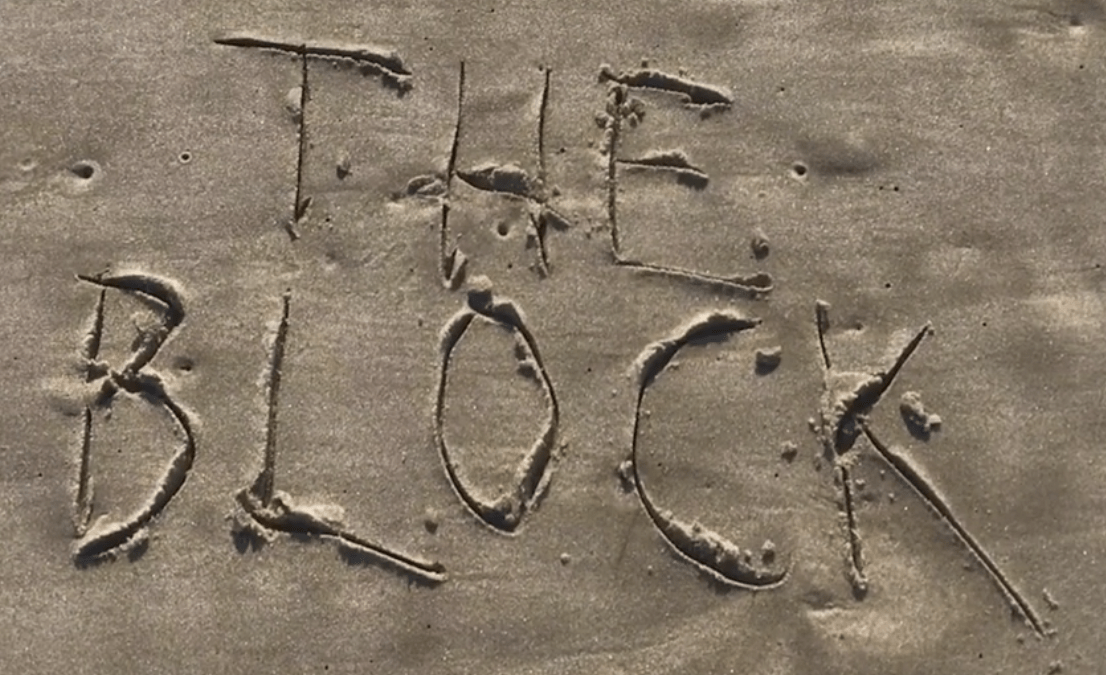
Fascinating that it got made at all — a labor of love, no question, for documentary filmmaker Robert Sarnoff — “The Block” on Amazon Prime is an of-the-moment portrait of the block in Belle Harbor, NY he lives on. At the western end of the Rockaway peninsula, near Jacob Riis Park, the block in question is Beach 138 St. At that point the peninsula is all of four blocks wide; the film focuses exclusively on the residents of a single beach block.

Sarnoff and his wife Lynda must have been (and I hope still are!) beloved by their neighbors because they elicited often surprisingly frank comments along with the expected hosannas about what wonderful neighbors everyone is. How much of the humor is intentional and how much not is part of the fun in watching, particularly the first half of the hour-long film. It’s a heck of an editing job by Michael Belmont juxtaposing the comments.

The fact is many on the peninsula have been tested on their neighborliness repeatedly, demonstrating deep friendship and resilience in the face of many storms and other catastrophes. Two are at the heart of the second half: The crash of American Airlines flight 587 a few blocks away just weeks after 9/11, and Hurricane Sandy, when many of the houses closest to the shore were carried out to sea and literally every house and business in the area suffered major damage.

Proud full disclosure: I grew up one block across and one block over between B. 136 and B. 137. And my close friend Gerry Cohen, who I’ve known since we were 13 and marked our bar mitzvahs one week apart, grew up on that now infamous B. 138 St. beach block. Gerry makes a brief appearance (though his name is misspelled in the credits), recorded on a day he happened to have headed to his old stomping grounds from Westchester and his long-ago neighbor Bob Sarnoff spotted him riding his bicycle down the block from Riis Park to visit.

For my part, I particularly related to the segment on shared driveways. And while my mother still lived in Belle Harbor when that American flight went down and my sister and I frantically tryied to reach her for hours until a neighbor called us on her cellphone (“Mom said, why should I call them? I’m fine.”), I lived through Sandy in Brooklyn. However, one vivid childhood memory is when the ocean and the bay met on my parents’ front porch during Hurricane Donna in 1960. Here’s a short video of that storm.

Two other documentaries about the Rockaways, both by Jennifer Callahan (I haven’t watched these yet; the second was broadcast on PBS):

The Bungalows of Rockaway

Everything is Different Now

And “Between Ocean and City” is an excellent book offering a deep history of the Rockaways by Lawrence Kaplan and Carol P. Kaplan.

If you haven’t seen Harmony, the Barry Manilow/Bruce Sussman musical about the Comedian Harmonists — a Weimar-into-Nazi era comic singing group that was a rage throughout Europe and appeared once at Carnegie Hall — take advantage of wide discount offers (see below).

Given this is the slow time of year for Broadway, and Harmony was already having a tough time filling seats, go while you can, and support what isn’t a perfect show (the first act especially needs more space for story- and character-development) but it is an important one. For a show in the works literally for decades, Harmony has a strong relevant contemporary message and a particularly heart-wrenching (and oft-times comic) performance by Chip Zien.

When we saw Harmony the other night we ran into our friend Christine Lavin, who has attended multiple times both when Harmony had its initial NYC run at the Museum of Jewish Heritage and since its transition to Broadway. We bemoaned the number of empty seats and batted around ideas about how Manilow might be able to boost sales by appearing for a week or two. Conductor? (Seen only briefly from the back, but that could be adjusted.) Join the curtain call and sing with the

cast? Take the role of the pianist, leaving the existing pianist to sing for those performances? Talkbacks/Q&A sessions at the end? There is ample precedent for such booster efforts – think Carole King and Beautiful — where the celebrity doesn’t have to overshadow the existing cast but can add an extra enticement for ticket-buying fence-sitters.

In addition to the Ethel Barrymore Theatre box office (243 W. 47th St.), as this is written, TDF has seats for tomorrow 1/6 and most performances 1/13-1/20; it’s been consistently available at the TKTS booths; and there are $18 day-of rush tickets.