nightmayer

Jottings from a pop culture junkie

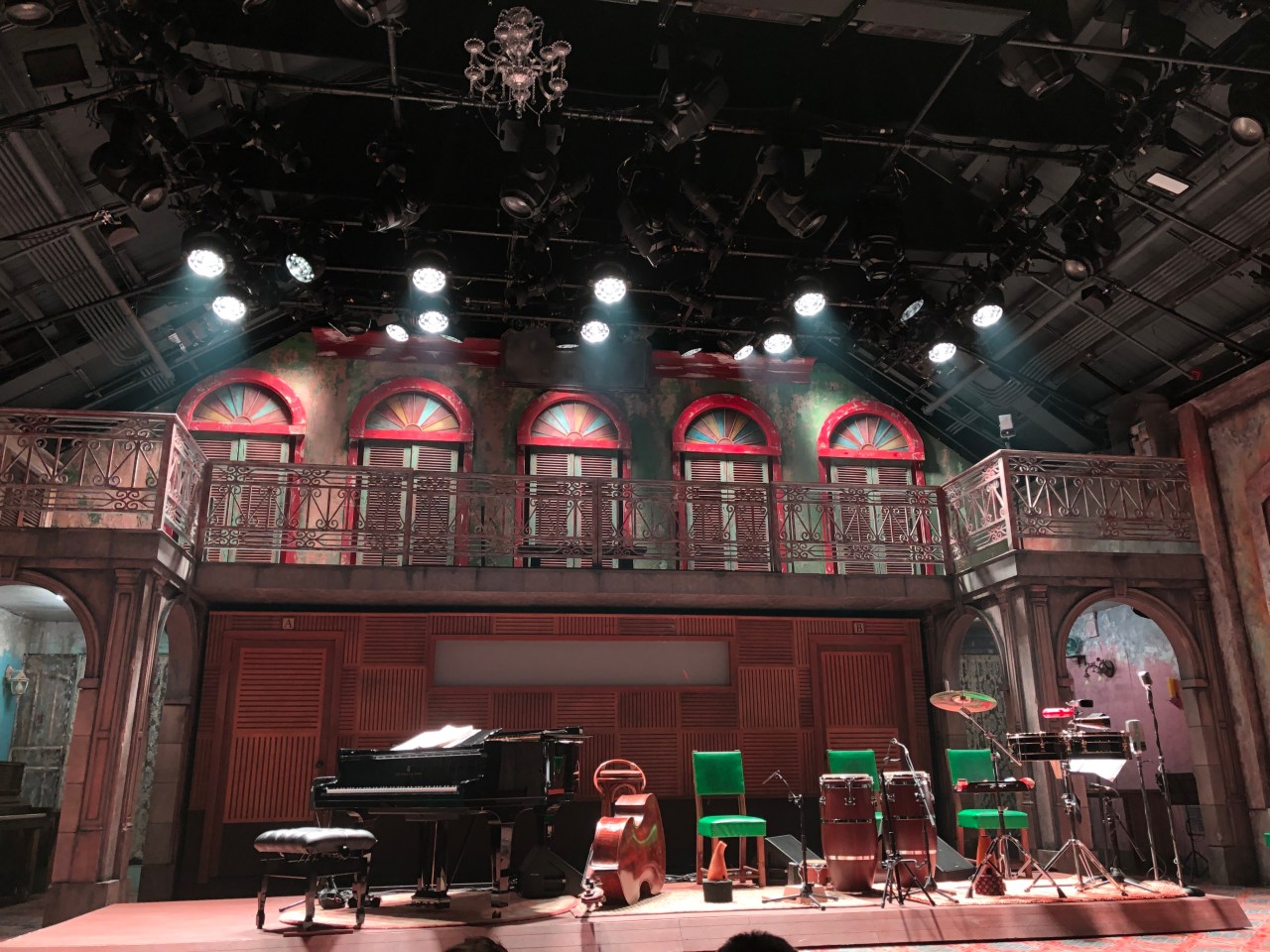
There is no more joyous party to be found in New York City right now than the one that instantly engulfs you at the Atlantic Theater’s Buena Vista Social Club

The show is based, with dramatic license, on the story behind the Ry Cooder-produced album of  the same name that was recorded with a band of Cuban musicians in Havana in 1996, and released on Nonesuch the following year. (Exactly how it is that neither Cooder nor the album are referenced in the credits for the show is a mystery I haven’t pursued.) The personal histories of the musicians are the core of the dramatic arc, running from roughly the 1940s through the 1956 Cuban revolution and the mid-’90s.

The band and dancers will blow you out of your seats. And while the songs are in Spanish, the book sets context throughout, leaving the actor/singers to convey the underlying emotions, which they do for each of the powerhouse 15 songs. 

The Atlantic Theater Company has sent a number of shows to Broadway — most recently Kimberly Akimbo and The Band’s Visit. Those were really intimate musicals just perfect for the 199-seat Linda Gross Theater where they, like Buena Vista, debuted. From the first number, this show just about bounds out the doors of this small room on W. 20th Street and right up Eighth Ave. If only Roseland were still around…what an ideal venue that would have been for the show, followed by dancing for all!

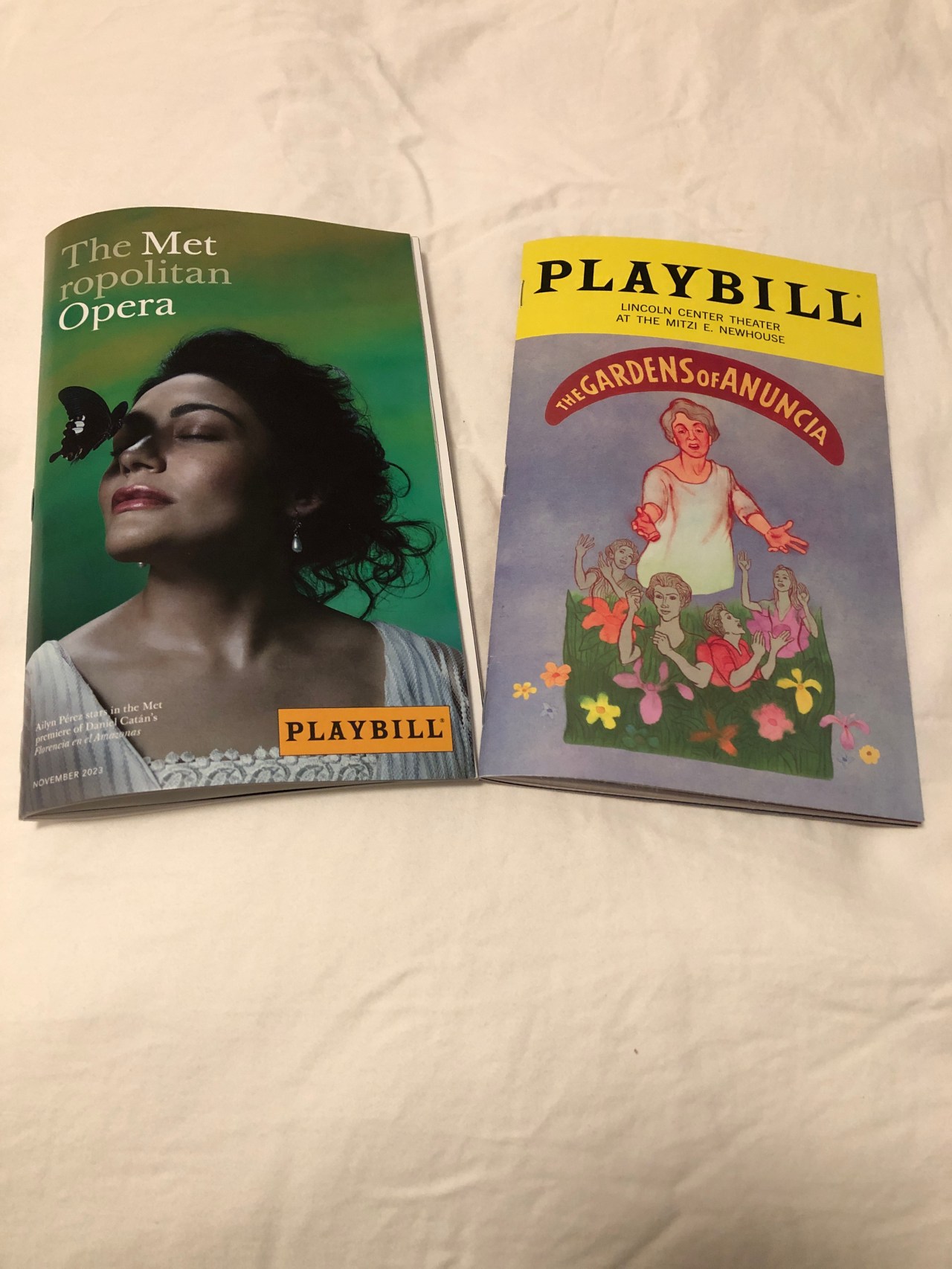
Magical realism makes coincidental back-to-back appearances at Lincoln Center, where the Metropolitan Opera presents Florencia en el Amazonas and the Mitzi Newhouse theater next door offers the music theater piece Gardens of Anuncia. I’m sure it’s coincidental — I can’t imagine the Met and Lincoln Center Theater could possibly be so coordinated as to have sat down together a few years ago to plot having two offerings where magical realism is a component. Still, it was striking seeing the two just a couple of nights apart.

Everything about opera composer Daniel Catan’s Florencia en el Amazonas is just beautiful. The lush, romantic La Boheme-ish music composed roughly 30 years ago (yes, you’ll wonder what took the Met so long to bring it here from the Houston Grand Opera, where it premiered in 1996); the multi-purpose imaginative costumes which at times double as scenery (you’ll understand when you see it); the Chinese-lantern-ish fish and Gepetto-inspired puppets; and the delightfully eerie sets — the production is, well, beautiful on every level. 

The opera is wonderfully sung and well acted. The story, as Riva pointed out, is no more absurd than most operas. Suffice it to say it takes place in the Amazon rainforest in the early 1900s with all of the action on a steamboat. A diva traveling incognito is en route to perform but more importantly to pursue her lover who previously disappeared in the jungle. There are a shipwreck, a dead passenger who returns to life, a manuscript that fell in the water that rains down from the sky, and a mystical character who appears in multiple guises as both human and animal. There you go. You’ve got it.

Sadly, for the Met there were many empty seats on Monday night. Happily for you, ththere are plenty of seats at the upcoming four performances; you may even be able to score $25 Met orchestra rush tickets, which are available starting at noon the day of performance. If you enjoy romantic opera you should go; and if you’ve never gone, as was the case for four young folks we met on the way out, this is a delightful introduction.

Michael John LaChiusa’s Gardens of Anuncia is a charming evening of musical theater, tender and sweet. The action split between Buenos Aires and the U.S. in the 1940s and ‘50s. “Charming” could be a backhanded compliment, and it’s not intended that way at all.

The redoubtable Priscilla Lopez (the original Diana Morales in A Chorus Line, who had a substantive career prior to that landmark role and continues to be active) plays Anuncia, a ballerina-turned-choreographer with a host of Broadway hits to her name. Based on the real-life story of ​​Graciela Daniele, in the play Anuncia is about to collect a Lifetime Achievement award though she is heavy with grief over the loss of one of the key women who raised her, whose ashes are in a box she must bury in order to move forward.

There’s a talking deer and its brother, a magical-looking forest and a younger version of Anuncia played by Kalyn West who is sometimes with her in “real time.” Musically the final 20 minutes are the most directly Sondheim-esque (specifically Sunday In the Park With George). This is hardly blockbuster material, but the show works and makes for a wonderful night in the theater.

TDF members, note: As I write this, there are 18 performances in the month of December listed with tickets at $39. The Newhouse is a small theater, and there are no bad seats.

When most music artists produce boxed sets the collections are typically their own greatest hits, deeper-cut retrospectives, re-mastered reissues, alternate takes, unreleased tracks, and so on. The sets are often elaborately packaged, with book or other items.

Christine Lavin’s “The Seasons Project” reflects her career not so much as the wonderful songwriter and performer she is (see my comments on the house concert Chris did for us in February 2020) but rather as the indefatigable booster of other folk-rooted musicians. As I’ve told her over the years, she’s a great marketer — of others, too modest in some ways to promote herself as vociferously.

Example: With 80 tracks here, only three are hers. Of the 69 soloists and groups included, Chris introduced me to the music of eight of them since we met in the 1980s. I’ve never heard of 27 and while I’m not exposed to as much as I was when writing for newspapers regularly, I’m clearly not listening widely enough. This is a great corrective.

There are four albums here, one loosely themed or simply mood-appropriate for each season. Those familiar with Chris’s work over the long term will recognize “On A Winter’s Night” and “When October Goes,” compilations she curated in the 1990s. They’ve been remastered and each has at least one new track. The all-new spring set is “Coming Alive Again;” summer, also new, is collected on “Last Song For You.”

I’m still going back through and discovering memorable voices, lyrics, and melodies. In five hours of music, I haven’t come across a track that I’d skip next time. Chris’s taste is THAT good and wide-ranging.

As for the packaging, the four “albums” arrive on a handcrafted thumb drive packed in a wood box made by Ukrainian box builder Mykhailo Chaban. The book? It’s a 480-page PDF with Chris’s commentary, bios of all the musicians, lyrics, and photos, on the thumb drive.

The limited edition collection is available only on her website. I hope she has cause to manufacture more. Says Chris, “I created this collection with an eye firmly fixed on the future — expecting 50-100 years from now folklorists will find it useful.” Useful, yes, and inspiring, not just for folklorists, and not just in the future.

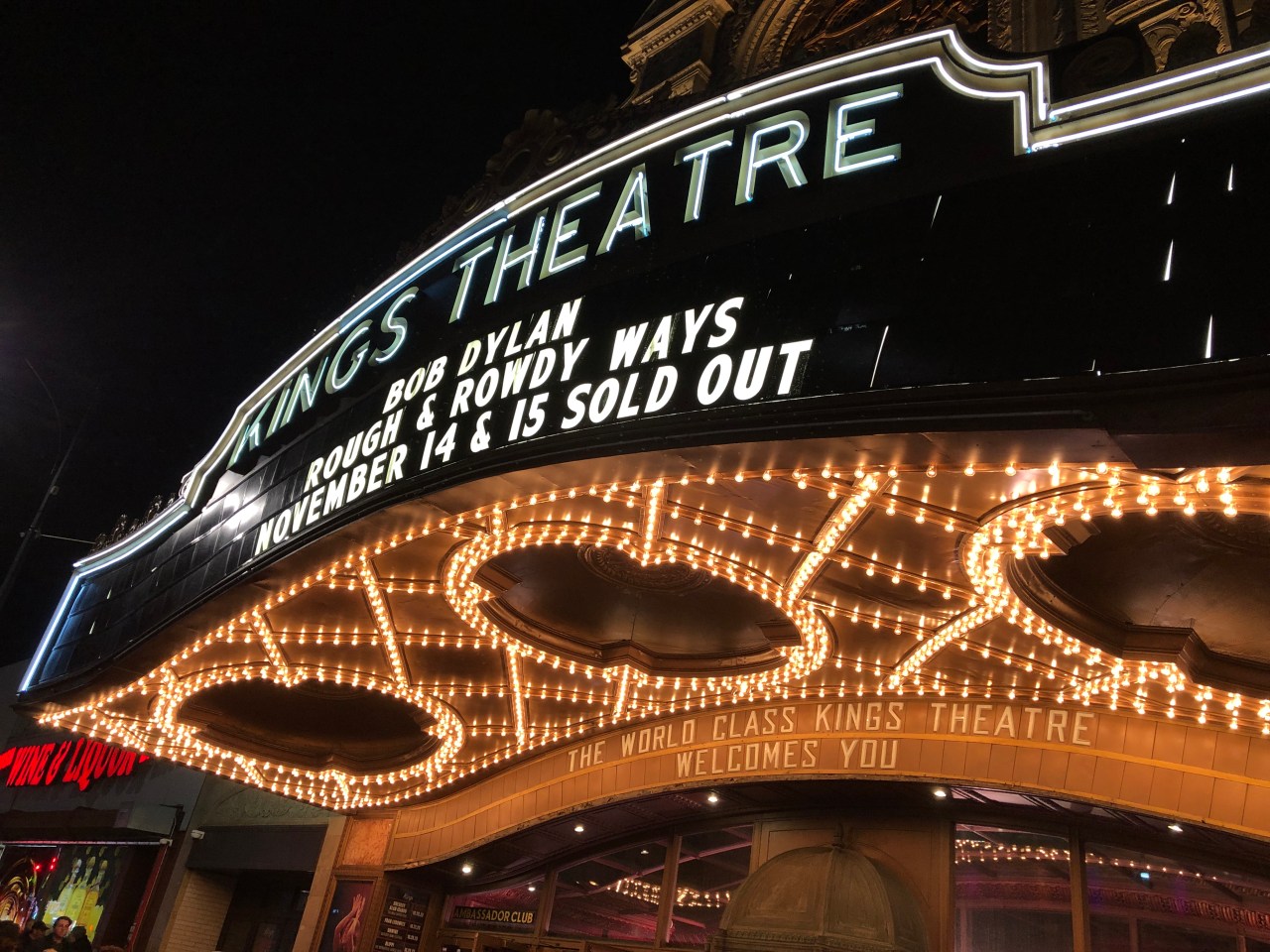
Attending a Bob Dylan concert is essentially placing a $200 bet against yourself. He’s not Ella Fitzgerald, who gave a masterful performance every time she stepped out on a stage. With Dylan you never know if you’re going to get an on night, an off night or simply something totally inscrutable. You’re betting on the curiosity factor, though you’re assured nothing less than interesting. Even a dreadful show at one of his extended Beacon Theater runs 15 or so years ago was interesting. His three song set in 1968, performed with The Band at Carnegie Hall as part of the Woody Guthrie Memorial Concert, was transcendent. Many notches above interesting.

This time wasn’t exactly a house concert, yet here was Dylan playing five blocks from our home at Brooklyn’s magnificently restored Kings Theatre. I could walk over. And did. 

The quick take: Dylan’s second night at Kings was fascinating. It’s the same 17-song show he’s been performing for two years now (exception: Johnny Mercer’s “That Old Black Magic” has been substituted for “Melancholy Mood”) yet it’s clear from the outset that his supporting musicians have no clue how he’s going to attack any given song.

That’s always been true — read some of Rob Stoner’s Facebook posts about his stint as bassist and band contractor for the Rolling Thunder Revue back in the mid-‘70s and how the musicians had to watch Dylan’s fingers and mouth to get an idea where he was headed. Talk to any long-time fan about how there have been periods where you couldn’t tell what songs he played any given night because he’d twisted them so much. 

Now, though, the set list never changes. This group has been playing these songs almost nightly — this was the 64th performance since this year’s leg of the tour began in April, and the tour overall started November 2, 2021 — yet the truism holds: Dylan is going to mine those songs differently every damn time. That’s another aspect of the bet. Sometimes that mining yields gold. Sometimes coal.

What Dylan and his current band delivered in Brooklyn in 2023 was in the Grateful Dead mode, with lulling improvisations for a mostly 20s-30s-early-40s audience. Many people sitting (really standing) near me were swaying in a stoned haze, making tai-chi-like hand motions — a throwback to Dead shows in the ‘70s and ‘80s, only these people weren’t born yet then.

It was all quite reverential. The ovation when Dylan emerged in the shadows (I mean that literally, and in the shadows he stayed) held through the first four or five songs. After that, at least up front, there were brief segments where everyone sat down before rising again, sometimes at seemingly mysterious moments. This is no Springsteen concert, though; it’s not that the music impels you to stand and move. It’s about legend. One woman in the audience said she was from the state of Washington, cat-sitting in Greenpoint for a friend. This was her opportunity to make up for the time 15 years ago (when she was 13) when she didn’t attend a festival in her home state that Dylan was playing because she had no idea who he was…”and now he’s in his 80s. Who knows how many more rounds he’s going to go?” That theme recurred among young and older fan conversations while exiting the theater and walking home.

A man sitting next to me had flown in from Ohio that morning for business. He checked the box office when he got to LaGuardia and like me discovered that eight or 10 house seats had clearly just been released for sale; we were Row G in the center. He had seen the show two years ago in Ohio, shortly after the tour began. How did this compare? “That was more rock and roll-y. This was more jazzy. He’s Dylan.”

I figure I won my bet. So did my Ohio and cat-sitting seat-mates.

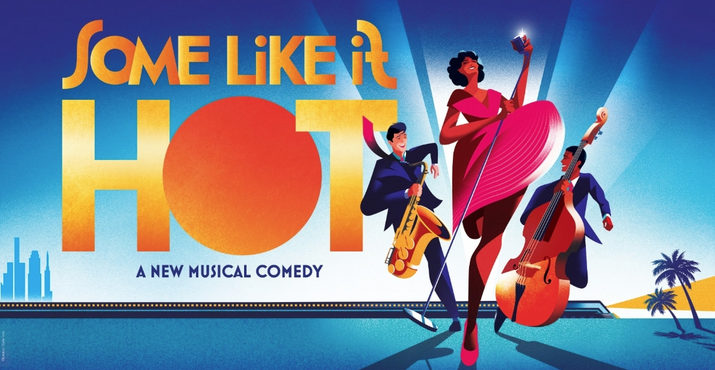
On a matinee day especially you have to wonder how many physical therapists are backstage at Broadway’s “Some Like It Hot” to tend to all those tap and swing dancers. We saw a Wednesday night performance and left giddy with delight; standing in Shubert Alley as the cast emerged after the show, they were clearly ready to hightail it home. You couldn’t blame them.

A cavalcade of non-stop 11 o’clock numbers by songwriters Marc Shaiman and Scott Wittman started from the opener and never let up. Those songs were further enlivened by all those tappers and swingers (plaudits to choreographer/director Casey Nicholaw) outfitted in eye-popping costumes (Gregg Barnes). And the book has been meaningfully updated from the 1959 film by Matthew López and Amber Ruffin, paying all due homage (and copping lines as appropriate), without getting overboard serious. This is a pure fun show, after all.

One complaint: The orchestra is so over-amplified I kept wanting to turn the volume down, and in the course of that blast the singing is consistently drowned out. That said, the cast gives its all throughout.

For those who qualify, as I write this there are eight upcoming performances at TDF.org for significantly reduced price tickets, including this Saturday night. The house was probably less than two-thirds full. Go, and then you, too, will be inclined to help spread the word-of-mouth.

Journalist friends:

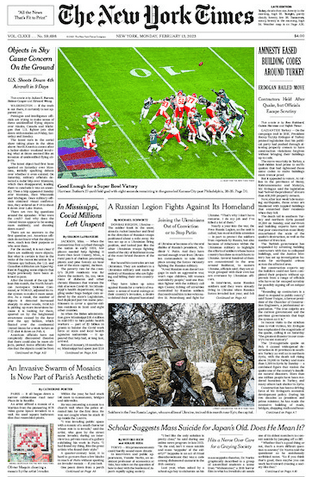
Reading the front page of the NYT this morning I realized that NONE of the news stories had what we were all taught would be a traditional “news lede.” They all kick off like feature stories; the news is often in a third or later paragraph, sometimes merely inferred. I went back to the Friday and Saturday front pages — one story on Friday and two on Saturday have classic news ledes — but most, again, are feature-style news reports. The WSJ uses proper ledes on the front page, except for what are legit features.

I’ve sensed this for a while at the Times, but hadn’t considered that it was a wholesale shift until this morning’s page 1. Is the Times abandoning the Who, What, Where, When, Why and How lede? I have to go back and re-examine the inside stories.

A quick Google search suggests j-schools are still defining ledes as answering those key questions, usually in the first paragraph and typically in one sentence. Just like the old days.

Is this a positive change?

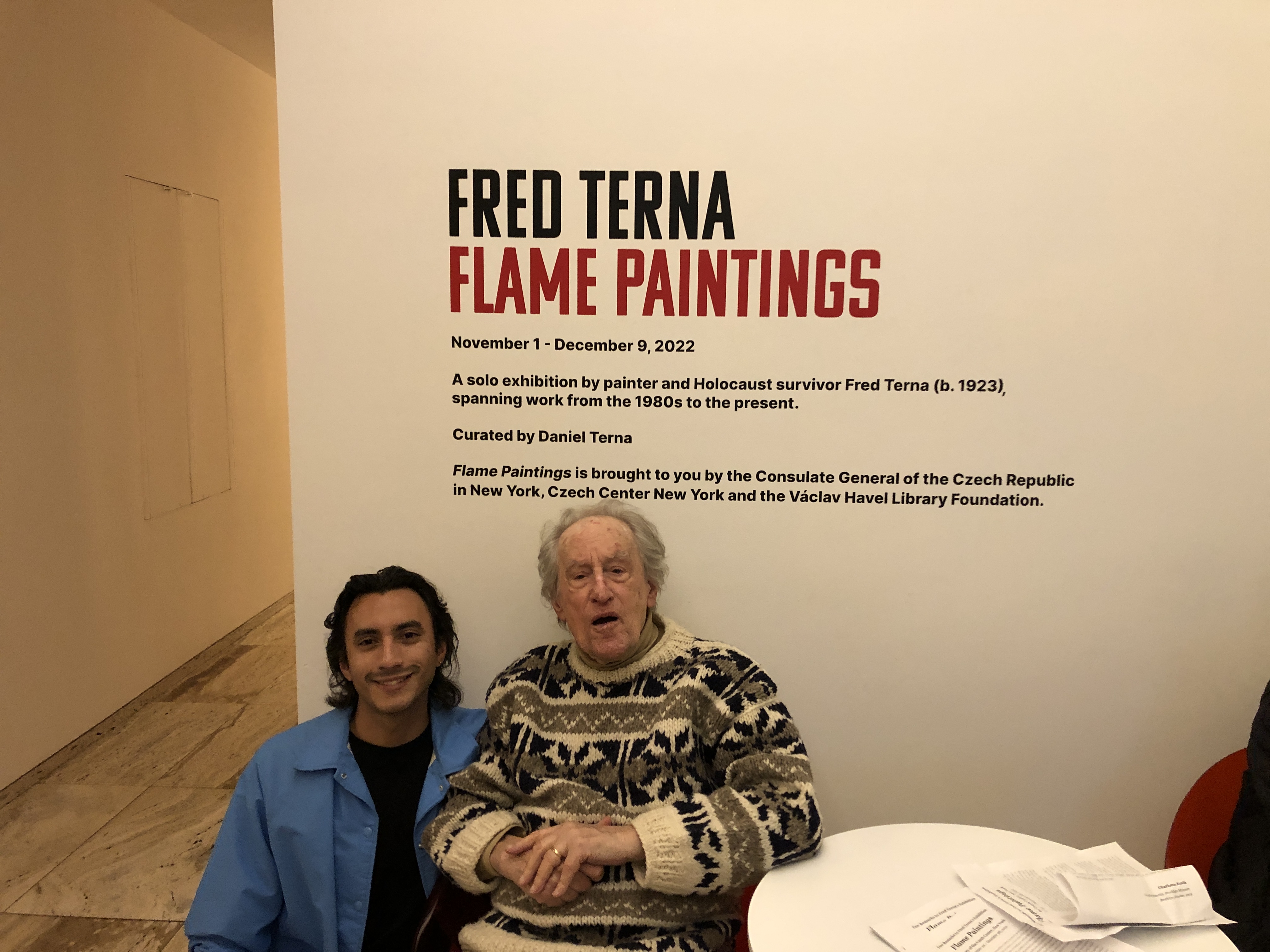
Artist Fred Terna is a Holocaust survivor. It is no surprise that much of his work centers on the trauma of that experience, and of surviving multiple concentration and work camps. A new show at Manhattan’s Czech Center Gallery at the Bohemian National Hall consists mostly of 1980s pieces, plus a few more recent ones.

Titled “Flame Paintings,” it is a stunning, soul-wrenching exhibit curated by his son Daniel Terna, a photographer and artist in his own right. Riva and I are fortunate to number Fred and his family among our close friends. I try to visit Fred’s studio whenever we are at their house, to see what he is working on. Having recently turned 99, he is still climbing the stairs almost daily to his third-floor studio and actively painting.

I know his work. Our daughter wrote his biography. I know his life story. Nonetheless, seeing this selection of works displayed so forcefully, in a stark white hall under the auspices of the Consulate General of the Czech Republic puts these Flame paintings in a very special context, with a resonance for our times that should not be underestimated.

The opening on Tuesday night was crowded; I plan to go back to reflect on each piece and on the cumulative impact of seeing them gathered in this way. I hope you have the opportunity to go as well.

The Gallery is on the 2nd floor at 321 E. 73rd St.; the exhibit is on through December 9th. For more information about the show, visit https://new-york.czechcentres.cz/…/flame-paintings….

To see more of Fred’s work, visit https://frederickterna.com/.

To see a selection of Daniel’s work, visit https://www.danielterna.com/.

For information on “Painting Resilience,” a biography of Fred, visit https://www.juliamayer.com/.

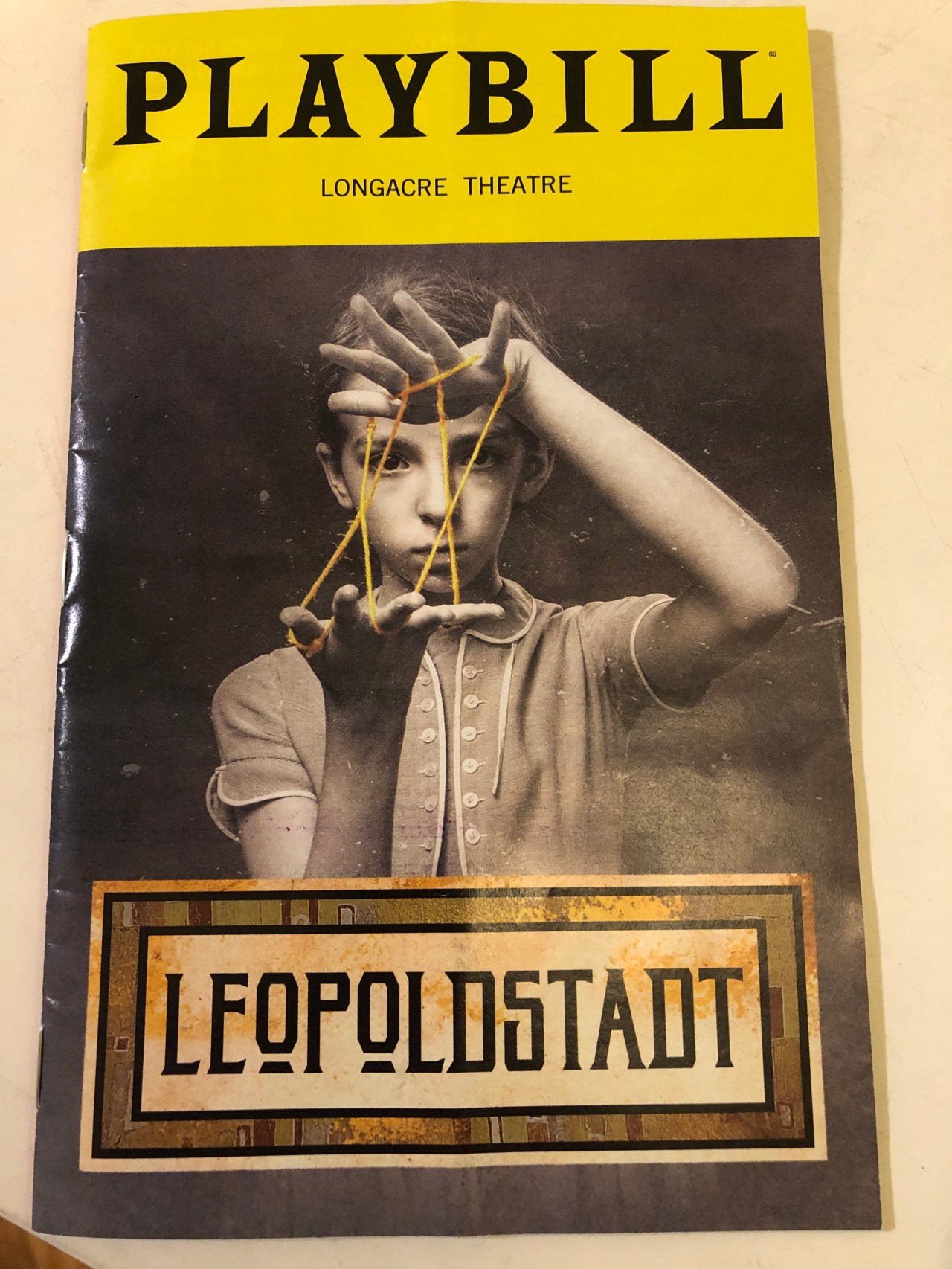
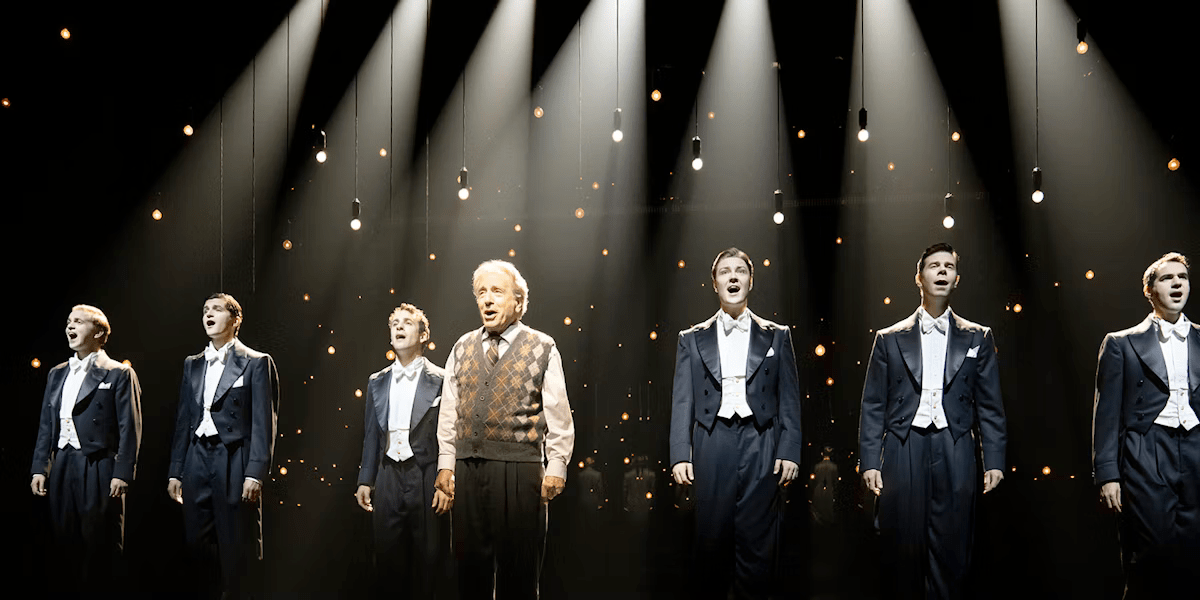
Tom Stoppard’s Leopoldstadt introduced me to 38 characters I recognized instantly. Every person on stage was familiar in their talk, their thoughts, their walk, their actions.

This is Stoppard’s coming-to-terms with the discovery late in life that his mother and he were Jewish. Upon arriving in England from Vienna in the late 1930s his mother changed their names so that no one would know they were Jewish. He — and we — learn the family history and what happened to those they left behind as they escaped. No surprises here — really — but what a telling.

The writing is taut, as are the tableaux of the family in its home in Vienna, the acting, and the direction. Even the set, simple as it is, is spot on. Stunning me for a moment was the character Rosa, who had the precise posture and bearing of three German Jewish sisters (one our beloved family doctor here in NYC who delivered me and remained my doctor into my mid-20s, the others her nurse and office manager).

Go. You will hold your breath for a fleeting two hours and 10 minutes. At the end your muscles will be as taut as that writing. So rewarding.

Leopoldstadt is in previews at the Longacre Theater, formally opens next month, and is scheduled to run through January 29, 2023.

After a full and musically satisfying Friday at the Newport Folk Festival with the family last weekend, the heat got to me Saturday morning while waiting to get back in for Day 2. The medics on-site determined it was dehydration and did a work up in their M*A*S*H tent. (“You’ve seen M*A*S*H, right? You have to have seen M*A*S*H. This looks just like it.” It did, except this one was air conditioned.)

My wife Riva, who was in a second car coming in later in the morning, detoured from the parking lot to the medical tent, where I was admonished to stay away from my staple seltzer and drink a lot of water and Gatorade — the latter of which, in the best of times, I gag on. I was down for the day and headed back to the lovely airbnb our daughter had found in Bristol, RI. I assumed if I drank enough Saturday I’d be good to go at least late in the afternoon for whatever finale Brandi Carlile had planned. It wasn’t even supposed to be that sunny on Sunday.

Well, too fatigued and not wanting to risk being stuck in a car for a couple of hours getting out of the parking lot at the end of the day, I wasn’t there for Joni Mitchell’s now-widely-reported and documented set. I’m delighted that my daughter, son-in-law, son, and his girlfriend got to see and experience a legend, if not at the peak of her career at a peak of grace and dignity and survival.

The videos are all over Youtube and Facebook, and there’s an excellent piece from CBS News with background on how this came together, what Mitchell has recovered since her brain aneurysm in 2015, and a chat with Mitchell after the performance.

But friends, listen to the lyrics. Joni Mitchell is 78 now; she wrote “Circle Game” and “Both Sides Now” around 1966 when she was 22. There isn’t a wasted word, not a cliché. Full verses, stunning choruses. 22. What is it that true artists feel and see and can express so early that the rest of us need a lifetime to maybe fully appreciate?

That depth is true for so much of what Mitchell wrote. It is no doubt what lends her rendition of “Summertime” here, and the smokier jazz-inflected voicings on the 2000 album “Both Sides Now,” on which she performs mostly other people’s standards as well as a couple of her songs that have become standards too, its legitimacy. My how she balances gravitas and lightness.

As for Carlile, I’ve written glowingly about her before. A unique aspect of her genius is her ability to shore up other artists without overshadowing them which, along  with her wide net of musicians who respect her, is no doubt why she gets to program these closing nights at Newport. Watch her carefully sitting next to Mitchell in these Newport videos, conducting the band, filling in notes, urging Mitchell on with a gentle touch.

I DID see Joni Mitchell at Newport in 1969 — the last time she appeared there — when she was on the Sunday afternoon New Faces program, with James Taylor and Van Morrison. I also saw her at the Mariposa Folk Festival in Toronto in 1972, when she, Bob Dylan, and Neil Young did simultaneous surprise guest sets on different stages, while Gordon Lightfoot did an impromptu unmiked set from a picnic table bench. And I saw her in concerts and club appearances from Carnegie Hall to the Bottom Line (the latter another unannounced guest set during an Eric Andersen show).

What Joni Mitchell overcame to do this Newport set is impressive. What gifts she shared. Even for someone who wasn’t there.

Oh, the first time I missed Joni Mitchell? My first assignment for The New York Post in 1978 was to review Crosby, Stills & Nash at Madison Square Garden. I’d gotten the assignment about 4:30 that afternoon and immediately called the label’s publicist Stu Ginsburg. Stu said he couldn’t get me a ticket but he could get me a backstage pass and I’d have to stand at the side of the stage. As CSN finished its formal set, all of us in the wings were shuffled off the stage. I went to the Post to write my review. The next morning I got a call from my editor, Steve Cuozzo. “How come you didn’t mention Joni Mitchell singing the encore with them?” Well… Thank you Steve for not holding that against me; I wrote for the Post through 1990.
“Cousin Ira!” boomed the voice at the other end of the phone line. It was always Paul Bloch, James Caan’s publicist. I’d known Paul, the head of the music department at the PR firm Rogers & Cowan roughly since I was 18 when I started contributing music reviews to the Village Voice, Sunday New York Times, and Rolling Stone, and before he added James Caan to the roster of movie stars he was representing. I’d told him that Jimmy and I were cousins. That was it. I had a new name. No one else ever called me that except one other publicist who worked with Paul.

The fine print: James Caan’s grandmother Bertha and my grandfather Isi were sister and brother. That made James’s father Arthur and my father Louis Mayer (no relation to Louis B.) first cousins. So I’m a cousin once removed, or a second cousin, or something. But James was always Cousin Jimmy — not that there were any other James or Jimmys in the family.

My sister Joan and cousin Emily, a few years older than me/a few younger than Jimmy, remember being at Jimmy’s bar mitzvah; I would have been 1, so I assume I was left home for the occasion. By the time my bar mitzvah came around in June 1965, Jimmy’s younger brother Ronnie and sister Barbara were in attendance with their parents, Arthur and Sophie, who everyone loved. Arthur and Sophie turned any room they were in into a party. At that point, Jimmy would have been filming one of two Howard Hawks films he starred in that year,  “El Dorado” or “Red Line 7000.”

I remember my parents coming home after seeing Jimmy off-Broadway in “La Ronde” in 1960, and recall being allowed to stay up to see him on TV shows such as “Naked City,” the storyline for which I was too young to understand. Just as I was too young to understand, while visiting Jimmy and Ronnie in Malibu the summer I graduated high school, what to do when they left my friend Howard and me alone for the night with Jimmy’s Playmate girlfriend of the moment. That was the same trip when they took us out to dinner, got into their cars as we got into ours, with Jimmy calling out, “Just follow us.” Of course they pulled out and went off in opposite directions.

Many of the recent James Caan obits reference their father Arthur as being a kosher butcher. That’s half right: He supplied restaurants with meat — much of the beef sourced from my father and uncle’s wholesale operation in what is now known as the Meat Packing District in NYC, the veal from another relative’s packing operation also in the Gansevoort Market. However, kosher wasn’t part of the mix. Arthur left Germany in the mid-1930s after a schoolmate said something nasty about him being a Jew. Standing on a famous bridge in their hometown of Bad Kreuznach, Arthur held the kid by the ankles over the water and threatened that if he ever said something like that again he’d drop him into the Nahe River below. Arthur skipped town pronto.

The Caan’s were all characters. My father earned his formal butcher’s certificate before leaving Germany in 1936 and when drafted here was recruited to run a cooks and bakers school for the Army. At some point over the years, Sophie Caan made him a present to honor his legendary BBQ skills (or whatever): an apron with a giant 3D penis on it. Then there was the night after Jimmy and Ronnie had moved to California. The boys had a girlfriend phone Arthur, still living in New York, in the early a.m. hours to tell him she’d just slept with both his sons — “the two best lays in California.” Arthur didn’t miss a beat. “You ain’t been fucked ‘til you’ve fucked the old man.”

For that period in the 1970s when I was given to driving to California and back, Jimmy and Ronnie were always very generous to me and to the friends I brought with me. They would put us up in whatever rental house they had at the moment, take us out, and ultimately arrange, through Paul Bloch, for a friend and me to visit Jimmy on set. The only stipulation was that if whatever publication ultimately bought the story wanted him to sit for a photo session, it had to be for a cover.

Following is a piece I wrote for The New York Times Magazine in 1977; The Times rejected it, and some parts ran in shorter form in the Post and elsewhere. Here it is reconstituted. Jimmy and I hadn’t been in direct touch since the early 1980s, though I remained close to his parents and obviously followed his career. I spoke to Ronnie briefly six years ago when he happened to call his mother while I was visiting her in Beverly Hills. She was 98 and still very together at the time (she died two years later). Just remember, this is as reported and written 45 years ago.

JAMES CAAN 1977: WHAT THEY DIDN’T TEACH US IN ACTING SCHOOL

“It happens to me all the time. You pour your heart out to somebody and all they write about is who you’re fucking,” cousin Jimmy tells me on the set of “Comes A Horseman.”

Some months later I call Jimmy a few days after the finalization of his divorce to Sheila Ryan — a second marriage that lasted about two years and gave Jimmy his second child/first son, Scott Andrew [now an actor in his own right; his first child was a daughter, Tara, by his first wife Dee Jay Mattis]. Claude Lelouche’s “Another Man, Another Chance,” in which he starred, was about to open — and close, all in a matter of days. An editor suggested I query Jimmy as to the similarities between the film and his real life.

“The parallel situation,” he explained, imitating himself as the English professor he played in “The Gambler,” “is that I have a son. My wife dies in the movie, but my wife hasn’t died as yet in real life. But I’m working on it.

“Fuck,” he adds instantly. “You didn’t go to school for nothing. Your cousin you don’t have to annoy with stupid questions. Make me sound intelligent, you asshole. Write it. Make it up.”

“Can I quote you on that?”

“Sure, go ahead. Why not?”

*   *   *

“Where’s Ronnie?!’ I ask my first day on the set. “Comes A Horseman, Wild and Free,” is an Alan J. Pakula film shooting on location in Westcliffe, Colorado.

“Taking a well-deserved rest,” wisecracks Jimmy, who is co-starring with Jane Fonda and Jason Robards, Jr.

Kid brother Ronnie is the living manifestation of Jimmy’s “I’d rather play than work” ethic. He went to Hollywood to visit Jimmy shortly after the actor’s first film, “Lady In A Cage,” in 1964. They’ve been horsing around together ever since.

Most people on the “Horseman” set know we’re related, and know I’m writing, so when I jokingly ask how much they pay Ronnie to stay away, the question doesn’t even elicit a smile. Some of Jimmy and Ronnie’s producer friends, however, have offered Ronnie upwards of $10,000 cash to get Jimmy to sign on for one or another picture. The two brothers just laugh at how little such “friends” seem to know them.

*   *   *

Westcliffe, Colorado is in the Wet Mountain Valley 50 miles west of Canon City, which is 50 miles south of Colorado Springs. It is nestled in at the foot of the Rocky and Sangre de Cristo mountains. Set publicist Harry Clein is driving several of us from the Canon City base to the set on very winding mountain roads. I’m in the middle of the back seat, having not said anything about my proclivity for motion sickness. It doesn’t take long. I lean over my friend, crank the window down just barely in time…most of what comes up lands on the outside of the door, though, and there is nowhere to stop and nothing with which to wash the car down anyway. “Cousin Ira,” as I’ve become known by Jimmy’s handlers, “if you say anything bad about this film, THIS story is EVERYWHERE!”

*   *   *

The weather changes several times a day, from crystal clear, windless 80-degree heat, to overcast with heavy gusting winds, to occasional thunderstorms that bless the then drought-stricken area with much needed water.

Geography and weather are all important because, while it is discomfiting to think or say that an area so beautiful is boring, this place is boring. Once you have noted how much Westcliffe resembles something you’ve seen in a 1940s western, and checked to make sure that the buildings on the main street aren’t just the facades you see on a studio tour in Hollywood, you’ve done what there is to do. Westcliffe is so small that its movie house lists the week’s title on only one side of its triangular marquee. The two block main drag dead ends on the other side.

Canon City, where the 80-member cast and crew for “Horseman” are headquartered, is even less to write home about. The town itself lacks charm or individuality. It boasts the Royal Gorge Bridge — the “highest suspension bridge in the world,” according the brochures, built as a tourist attraction, not out of commuter need — and medium and maximum security state penitentiaries. Local legend has it that the townspeople were given the choice between a state university and a state pen. The good people of Canon City (pronounced “canyon” though the cedilla is never written in) opted for the latter as that was “the more likely to be well attended.”

A dozen motels and a handful of routine restaurants line the main thoroughfare. The Ramada Inn, home base for those involved with “Horseman,” has a live band in the lounge weekend nights. So much for entertainment. The “Horseman” entourage will be here for two months.

Jimmy Caan needs action and is famous for making his own when things get quiet. The National Enquirer may stretch some tales to get what it wants, but three days in Canon City and Jimmy had already punched out a guy in a bar who had insulted Ronnie.

The temper and practical joking are a gossip columnist’s dream. As is Jimmy’s love life. Even members of the Caan family joke that Jimmy doesn’t know who he’s slept with until he reads the morning papers. But a few weeks in Canon City have blunted the edge of Jimmy’s well-honed personal style. And without his saying anything, it is obvious he is at odds with director Pakula.

*   *   *

The films Alan J. Pakula has produced and directed, including “Klute,” “The Parallax View,” and “All the Presidents Men,” won all manner of awards, including Oscars for both Jane Fonda and Jason Robards, Jr. Pakula is a soft-spoken, red-bearded man of 49 who exercises a quiet, steadfast control over his set.

For “Horseman” he has assembled what is probably the finest film-making crew available — from cinematographer Gordon Willis (“The Godfather,” “Annie Hall”) right on down the line. Pakula consults constantly with actors and technicians, but from the little I overhear during rehearsals and between takes, it is plain that the phrasing of his questions suggests the answers he wants.

Pakula arrives on the set each morning in neatly pressed chinos, Oxford shirt, golf jacket, and broad-rimmed felt hat. He could be a professor of film at any big name liberal arts university. And he confirms that impression upon replying to the one question I have the opportunity to pose to him: What drew one of Hollywood’s most in­-demand directors to a western — a genre that has not been popular in years.

He answers with abstract references to 19th century expansionism, Ayn Rand, and the ages old quest for individual freedom. He is a thinker, a questioner, an intellectual. He is not given to impulsive decisions, sudden actions or spontaneity. He is as precise in his approach to a journalist as he is in demanding word-for-word adherence to a script.

*   *   *

“I hate 44 rehearsals,” says Jimmy defiantly. “People who just rehearse and rehearse…I don’t knock their system. For me it’s no good because everything becomes mechanized.”

The comment, made in the privacy of the 21-foot Apollo motor home which serves as Jimmy’s daytime hangout and dressing room, is not directed specifically at Pakula. Jimmy’s treading water cautiously: Pakula’s track record is impressive, and James Caan needs a hit.

“It’s a whorish business,” Jimmy is fond of saying. “Two or three flops and you’re the lower right hand corner on ‘Hollywood Squares.'”

But Jimmy the doer is in direct conflict with Pakula the analyzer. Pakula rehearses every scene, sometimes closing the set even to the crew, and he then shoots repeatedly as much to experiment with effect (dust flying, cattle roaming, cloud formations) as to capture the exact performance he wants from the actors. During the week I am there, a day and a half are spent waiting for the sun to shine properly in order to match up with earlier shots.

Jimmy prides himself on becoming the character he is playing for the duration of filming and prefers what you might euphemistically call a less rigid approach. He reports glowingly, for example, of his experience with Lelouche — of filming “Another Man, Another Chance” in five weeks, shooting each scene straight through, and going for the reality of the moment. “In a sense,” Jimmy says, “it’s like a stage play. Whatever happened — if a chair fell or something — happened. That type of film has a wonderful kind of documentary feel. It’s a good feeling for an actor.”

*    *    *

At 37, Caan has fulfilled a childhood ambition: He is a cowboy. He enjoys the liberty the $1 million-plus-percentage-of-the­ gross almost each of his films affords him, but he prizes the $125 purses he wins as a team roper in rodeo competitions as the child prefers the box to the brand new toy. He’ll take less for a film he really wants to do (“Another Man, Another Chance”), figuring that the big money numbers pay for the more arty roles and cover the rodeo entrance fees.

But while he insists he hasn’t learned to say “No” to friends, he turned down $4 million to play the lead in the remake of “Superman.”

“Marlon Brando called me up,” he says, “and asked what was the matter, wasn’t the money enough. I told him the money was incredible. But, I said, you don’t have to wear the suit.”

In Sunnyside, Queens in New York City, a tough, street-wise neighborhood where Jimmy grew up to the roar of an elevated train, Superman was, no doubt, sissy stuff. Taking to the rodeos, though, was one way of becoming the all-American. Jimmy’s previous shot at that title, at age 16, was quarterbacking at Michigan State, a career which ended when the injuries outnumbered the completed passes.

After dropping out of Michigan and drifting a while, the eldest of the three Caan children (sister Barbara is in the middle) took up acting at Adelphi University on Long Island. Soon thereafter he landed bit parts on television’s “Naked City,” played the lead in an off-Broadway production of “La Ronde” and after marrying Dee Jay Mattis at age 19, took off for his Hollywood film debut opposite Olivia de Havilland in the best-forgotten “Lady In A Cage.” “Overnight success” came in 1972 when the television film “Brian’s Song,” about late football star Brian Piccolo, and “The Godfather,” in which he played Sonny Corleone, brought the recognition the critics had long been saying he deserved.

The critics have always been generous to Jimmy, no matter how awful the picture. And his career has been all too populated with turkeys. Four of the latter he has never seen. “I suppose I could name them, but then I’d just be reminding the public that I did them.” And some of the bigger money-makers — such as “Slither” and “Funny Lady” — have been satisfying neither critically nor personally.

“The Gambler,” in which Jimmy portrayed an obsessed English professor, and “Rain People,” in which he played a mentally disturbed football player, are generally considered his acting triumphs to date. “The Gambler,” however, was a hit in New York alone; “Rain People,” released in 1971 amidst an executive upheaval at United Artists, never received the distribution or promotion it should have gotten.

“What upsets me,” Jimmy explains during a discussion of the inconsistent quality of the films he’s done, “is that sometimes I feel like I had more respect as an actor seven, eight years ago than I do now because I’ve been in these — there’s that word — ‘commercial’ films. Hopefully they’re all commercial. But you’re put in the position of having other people run your life. They ask, ‘What do you want to do all these characters for?’ Well, that’s what it’s all about to me.

“When I was 20 I used to say that if I was going to play the saxophone and I played ‘Yankee Doodle Dandy’ on the saxophone better than anybody in the world, I still wouldn’t be playing the saxophone. You’ve got to play a lot of things. That to me is one reason this is an art.

“‘Oh you’ve got to do this picture with Peckinpah,'” [“Killer Elite, another one of the turkeys].

“Why? But I say okay. If it was up to them I’d be doing Sonny for the rest of my life.

“‘Oh Jimmy, you can’t play this nebbish guy with glasses.’

“‘Why not?’

“‘This isn’t you.’

“Well ‘this’ isn’t the story of my life.”

Outside the trailer on the “Horseman” set the technicians, costumers and prop people stand in the shade by one of the equipment trucks and play poker using the serial numbers on dollar bills. Actor James Keach sits under a tree playing a guitar. Jane Fonda alternately reads and suns herself using a foil-lined cardboard reflector. If there is one subject about which everybody on the set agrees, it is that this is slow going. Half a day might be spent setting up a shot. Then if the sun isn’t positioned right Pakula and Willis move to another location and shoot a completely different scene. It takes about three hours to make each switch, plus rehearsal time, before the single camera being used begins to roll.

The pace is particularly irritating to Jimmy because he has just come off the Lelouche film and, in addition to his disagreements with Pakula, his marriage is in serious trouble. He won’t discuss either of those subjects, though, so we move on to other directors. He has praise for Francis Ford Coppola, with whom he worked on “Rain People” as well as “The Godfathers,” and for Stanley Kubrick, with whom he hasn’t worked. But he has serious grievances concerning the “lack of imagination” in Hollywood. Told in June of Coppola’s planned television version of “The Godfather,” Jimmy’s reaction is one of disturbed cynicism.

“More money for ‘The Godfather.’ They’ll beat it to the ground. It’s a terrible thing. They don’t let nice things rest, ever. ‘Godfather I’ was a hell of a picture, but they just don’t let it rest. It was a great feeling of accomplishment for Francis, but now they’ve got to do ‘Godfather II,’ ‘Exorcist II,’ ‘Jaws II.’

“I believe in the younger people today. These old scripts you get from guys who write during their coffee breaks — you’ve seen them a hundred times. But the studios are afraid to go with younger people. Yet it’s the young audience that we’re after. Young in mind, not necessarily in age. But they’re bright, they’re hip. They want to be stimulated mentally and emotionally rather than be hit in the head and told everything.

“That’s my biggest gripe. The scripts are full of exposition and poignancy. Every page,” he spits his words vehemently, “is

P-0-I-G-N-A-N-T. Directors and writers are afraid audiences aren’t going to understand, so they have to tell them.

“There are a lot of guys who write, produce, direct, act, and make nine zillion dollars, I’m never in that position because I don’t want to be bothered with it. I’d rather play than work.”

Does he see himself turning to directing?

“I suppose the more disappointed you get….I’d like to work with actors because I know what they feel and what they go through. So often your best shit is on the cutting room floor.” (That conversation took place in late June. By January Jimmy had taken on his first picture as director under a new contract with United Artists.)

Jimmy has contempt, too, for some of Hollywood’s big-name actors “who used to be good actors but who find themselves making a lot of money to smile and look cute. They don’t want to act anymore.”

Whether it is his sense of diplomacy (not generally regarded as one of Jimmy’s strong suits) or fear of being misunderstood (he often blames the press for “misconstruing my words”), he will not name names, nor comment on his impression of “A Bridge Too Far,” one of those blockbuster Hollywood war pictures in which he was one of nearly two dozen name stars.

*   *   *

The rodeo is Jimmy’s escape from movies, fan magazines and family (journalists and otherwise). It requires total concentration. And that, for him, is relaxation. (A bad shoulder kept him from tennis for more than a year, but his interest remained strong enough that he sold a Beverly Hills mansion that he had spent two years converting into a glorified ranch house when the city elders wouldn’t allow him to build a tennis court that would have faced Sunset Boulevard.)

His movie contracts stipulate that he can’t ride while filming, since an injury would mean several weeks or months off the set. Nonetheless he is disconsolate when he can’t get a half day off July 4th weekend to ride in a rodeo in Greeley, Colorado — a rodeo no one on the set wants to know about officially, lest the insurance company find out that the thought had even crossed Jimmy’s mind.

Denied the emotional and physical release that the rodeo provides, all of Jimmy’s tension continued to mount in Canon City; “Horseman” running weeks behind schedule did not help matters.

It was not, apparently, a fun time for anyone. Jimmy became increasingly temperamental, and the set remained pretty much off limits to journalists in the interest of keeping flare-up rumors to a minimum. Of course they made the gossip columns and fanzines anyway. Talking to those who were on hand throughout the filming yielded two general attitudes: Jimmy’s face and technique had matured considerably in the last few years; yet even those who had worked with him in the past were surprised at his ”lack of professionalism. Everybody’s as bored as he is,” went the “don’t quote me” comments. “We’ve all got our personal problems. But at a million dollars a shot, you have to separate those things out.”

Jimmy and Ronnie got into a car accident on a winding Colorado road, demolishing their car, but walking away unharmed. A stuntman died on the set in the course of rehearsing a scene. Two new location moves — to Arizona and northern California — were added to the shooting schedule.

When it was all over, the no-fault divorce was settled.

Friends and relatives alike had been surprised by the sudden marriage to Sheila in 1975. The divorce was less of a shocker. Jimmy will be paying $3000 a month alimony and child support for the next five years. And as of mid-1978 the divorced couple are said to be spending a good amount of time together and getting along just fine.

Jimmy then returned to the rodeo circuit. And he started doing talk shows in support of the ill-fated “Another Man, Another Chance.” (“Even if it doesn’t do well,” he’d told me after seeing an early cut, “I’ll still like it. It’s a lovely film.”)

*    *    *

It’s a rainy, cold afternoon on a ranch a few miles outside Westcliffe. We are sitting in Jimmy’s trailer where, since 7 a.m., he has been playing cards and joking around with some of his rodeo pals who are on hand as stuntmen and herders looking after the cattle being used for “Horseman.” 

One of the assistant directors enters to tell Jimmy that they are about to rehearse the campfire scene. Jimmy points out that he rehearsed it 20 times the day before, but adds that he’ll be happy to oblige. Five minutes later another assistant director enters to inform Jimmy that they are about to rehearse the campfire scene. Jimmy pretends never to have heard of it.

“That’s show business,” he says, as assistant director #2 leaves. “Dealing with assholes. They never taught us that in acting school.”